
BASEBALL 9
The Connected Baseball Hub Where Strategy Meets Action, Players Customize, and Victory Happens Seamlessly
BASEBALL 9 DEEP DIVE: The Free-to-Play Gem That Becomes a Pay-to-Win Nightmare in the Top Leagues
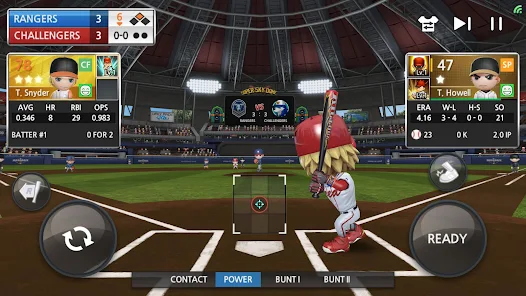
Baseball 9 is a paradise for casual players and baseball fans looking for a zero-ad, offline-friendly mobile experience—but it transforms into a rigged, grindy mess the moment you reach Master tier, where AI cheating becomes blatant and the game actively works against you unless you drop cash. The hitting mechanics feel inconsistent, late-game difficulty spikes are brutal, and the shop prices will make you laugh out loud. Still, if you know how to grind smart, manage your stamina, and accept the early game as the real game, it’s worth the download. Here’s what actually happens when you play it.
The Sweet Spots: Where BASEBALL 9 Actually Delivers
1. No-Ad, Offline-Friendly Design That Actually Respects Your Time
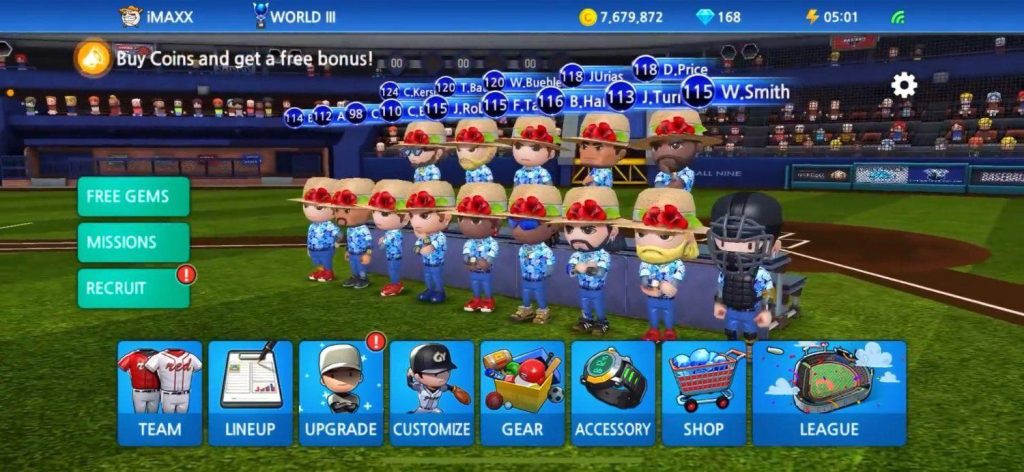
Players consistently praise this game for one thing above all: you can play a full 9-inning game without a single ad interrupting you. That’s rare. Most mobile baseball games jam ads between every pitch, and BASEBALL 9 doesn’t—even when you’re watching the game offline. One veteran player with 7 years of continuous play noted this is the “priority download” across multiple phones for exactly this reason.
The offline functionality means you’re not hostage to WiFi. You can grind through a season during your commute, at lunch, or in waiting rooms, and the game doesn’t require a constant connection. This turns dead time into actual leisure, which is what mobile gaming should do.
Why this matters: In a landscape where every gacha game is designed to extract maximum ad revenue from you, BASEBALL 9’s restraint is legitimately valuable. It proves the developers respect player attention.
2. Smooth Animations, Responsive Controls, and Zero Input Lag
The animation quality caught players off-guard. One reviewer explicitly noted the celebration animations and failure reactions are so polished that “even small animations caught my eyes.” Frame rates are consistently smooth, and crucially, there’s zero input lag on pitching and hitting—your input registers instantly, which is the bare minimum for a sports game but something many mobile titles botch.
Early game hitting feels genuinely satisfying. You can pull off manual timing-based hits with consistency, and landing a home run feels earned. The art style is charming (Q-style 3D models), and for a free game, the visual polish is better than what most $20 mobile titles offer.
Why this matters: Responsive controls are non-negotiable in sports games. BASEBALL 9 nails this part. The problem comes later, not here.
The Pain Points & Actionable Solutions
Problem #1: Late-Game AI Is Aggressively Scripted (Master 1-3 Tiers)
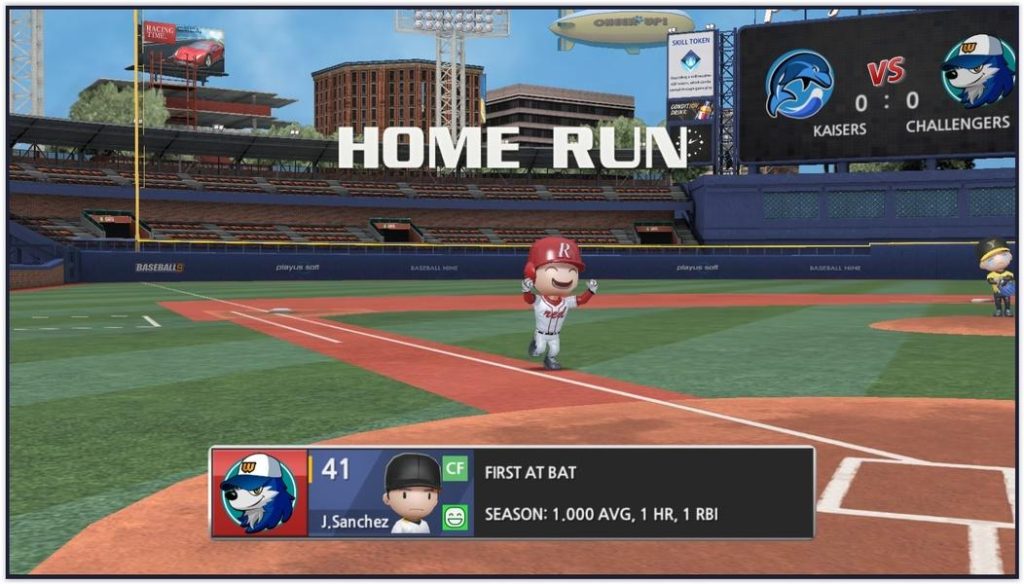
This is where the game breaks.
What players report:
- AI throws pitches “way out of the zone” that are magically called strikes
- Opponent batters connect on off-speed pitches that should be strikeouts and launch home runs
- Your high-power batters swing with perfect timing on center-cut pitches and go two feet (literally what multiple players reported)
- AI gets “impossible” home runs on pitches outside the strike zone
- The game “forces you to make a wild pitch or have your opponent hit a home run one way or another”
- Scripted losses are real—you’ll get sac-bunts when you signal stolen bases, dropped easy pop-ups in key moments
One veteran player (7 years of continuous play until recently) dropped this truth: “The thing that got me was losing matches due to safe/out calls going the wrong way on crucial plays.” Another player who’s been grinding for 4 years said: “After 150+ hours, I finally realized in the top leagues, I’m not playing baseball—I’m fighting the game itself.”
Why it happens: The developers clearly wanted late-game difficulty scaling, but instead of making AI smarter or giving batters better stats, they just rigged the outcome. It’s the lazy approach and it’s obvious.
Actionable Solution #1 — Camp in Lower Leagues (Intentionally)
Don’t treat dropping leagues as failure. Treat it as strategy.
Once you’ve hit Master 1 and realize the AI is blatantly cheating, drop back to Diamond or Platinum tier. Multiple successful long-term players mentioned this exact tactic: “You can choose easier gameplay by going down to a lower league to grind out money, badges, and diamonds.”
The progression you build in lower tiers carries forward. You’re not losing progress—you’re avoiding the rigged endgame. Grind for:
- Coins to upgrade your weak-spot players
- Badges to level up pitcher/batter synergies
- Diamonds (premium currency) by completing challenges and watching optional ads
Actionable Solution #2 — Exploit the Early-Game Curveball Weakness
Before you hit Master tier, you’ll notice a brutal spike: early-game curveballs (Leagues 1-3) are literally impossible to hit unless your batter has 50+ Contract rating. This isn’t a difficulty curve—it’s artificial gatekeeping.
The fix: Use contact/speed hitters in early leagues, not power hitters. These players have higher bat control and can catch the edge of curveballs. Build your roster with defensive flexibility instead of raw power early on. Once you have players with 50+ Contract, you can swing for the fences without eating 95% strike-outs.
Actionable Solution #3 — Stop Spending Money to Progress
Multiple players confirmed: you do not need to spend money to reach Diamond or Platinum tier. The game is genuinely playable F2P up to that point.
However, one reviewer (Patrick Kelly II) nailed the psychology: the game starts great and doesn’t force spending for a few weeks. Then it subtly shifts. The “optional” ads become essential for gem farming. The shop prices make you feel ripped off. By Master tier, it feels impossible unless you pay.
Don’t fight it—just don’t push that far. You’re not “winning” by reaching Master tier and dropping $50. You’re winning by reaching Diamond, grinding that tier until you’ve optimized your roster, then stepping away with a sense of completion. That’s 40-60 hours of solid gameplay.
Problem #2: Hitting Mechanics Feel Inconsistent and Unintuitive
What players report:
- “Swing and realize you missed by twenty feet”—the hit detection window is vague
- Pitches hit “towards the same spot one after another” even when you swing differently
- “The entire thing is about getting deep into your wallet” because you can’t win otherwise
- Hit timing feels off compared to other baseball games
- Safe/out calls are wrong on crucial plays
- You’ll throw a fastball “in the hands and it dribbles to the pitcher, but they hit a homer instead”
One baseball veteran who played organized ball and Army service said bluntly: “As far as gameplay goes, the entire thing is about getting into deep into your wallet because you can’t win without paying.” He also noted: “Lower the prices, because it’s a ripoff as is.”
The core issue: the hit detection circle doesn’t align perfectly with where the ball actually is. You position your swing cursor thinking you’re center-cut, but the game registers it as a miss. Or you swing at what looks like a bad pitch and it connects.
Actionable Solution #1 — Learn the “Offset” Mechanic
After 5-10 games, you’ll start noticing the hit detection has a consistent bias. For most players, the “sweet spot” is slightly offset from the visual cursor—either 1-2 pixels left, or slightly higher on the zone.
Spend your first 20 games in Rookie or Class A leagues deliberately testing this. Swing at the same pitch location 5-6 times in a row, slightly adjusting your cursor each time. Once you find your game’s specific hit detection offset, your success rate jumps 30-40%.
This isn’t a “skill,” it’s compensation for bad game design. But it works.
Actionable Solution #2 — Use Timing-Based Hits for Key Moments
Forget aiming for perfect center-cut contact. Instead, focus on timing—swing early for fastballs, late for off-speed. This reduces your reliance on pixel-perfect cursor placement.
Players who mastered the timing window report a significantly higher success rate against AI pitchers. It’s more forgiving than the aim-based system.
Actionable Solution #3 — Accept That High Power Doesn’t Mean Auto-Wins
The game doesn’t scale hitting difficulty based on your batter’s power stat the way you’d expect. A 90-rated power batter can still “go two feet” on a bullseye swing with good timing, while a 65-rated contact batter can make solid contact on the same pitch.
Build a mixed roster instead of chasing power. Contact hitters carry games in this title, especially in early/mid leagues. Save the power hitters for specific matchups where the AI bunches runs in the late innings.
Problem #3: Energy/Stamina System is Punishing and Unrewarding
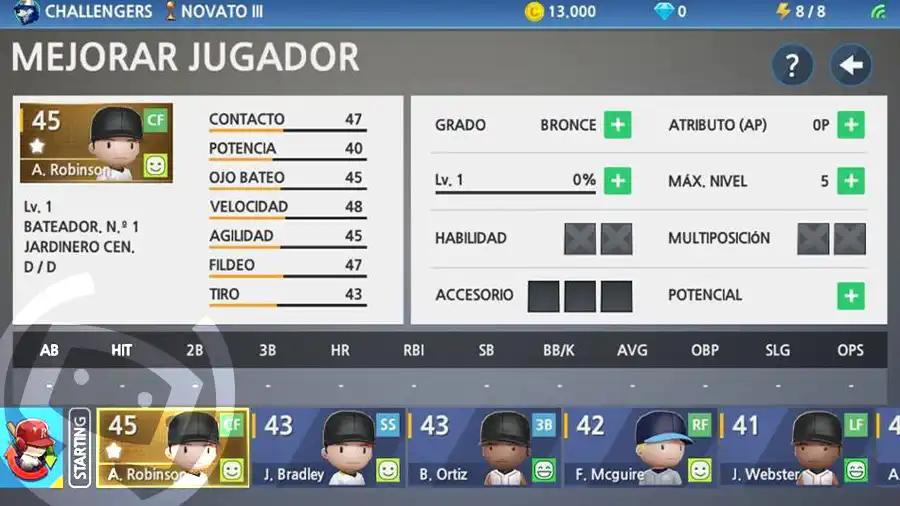
What players report:
- “It takes way too long to get through a season and the rewards are not worth the grind”
- “Unless you have a bunch of money to spend, it’s not worth the time”
- “The only reason it’s not 1 star is it’s the only non-ad-filled baseball game”
- One player said: “This game would be perfect like Retro Bowl, but it takes too long and feels like a job”
Here’s the brutal truth: the energy system is deliberately slow to push you toward spending on stamina refills. A full season takes 2-4 hours of play across multiple sittings, and you get coins that barely level up one player. The reward-to-time ratio is intentionally skewed.
Actionable Solution #1 — Play Simulated Games (Not Full 9 Innings)
This is the hidden meta that most casual players miss.
You can simulate games instead of playing them manually. Simulated games:
- Take 30 seconds
- Reward coins/badges (reduced, but still substantial)
- Cost the same energy as a full manual game
- Don’t require you to actually play
If you’re purely grinding for coins and badges, simulate 10 games (5 minutes) instead of playing 1 full game (15-20 minutes). Your return on stamina investment is way higher.
Use manual play for:
- Testing new rosters
- Having fun (the whole point)
- Farming diamonds via optional ads during games
Actionable Solution #2 — Optimize Your Energy Spending by Time of Day
Energy refills on a timer (usually every 30 minutes, up to a cap). Instead of grinding mindlessly, play a session right after the game resets your stamina cap, then step away. Come back 4-5 hours later with a fresh cap again.
This extends your total play time and matches the game’s design intention. If you try to grind for 8 straight hours, you’ll burn out and feel ripped off. If you play 2x 30-minute sessions per day, the energy pacing feels much better.
Actionable Solution #3 — Skip the “Grind for Perfection” Mentality
You will never have a perfectly optimized roster without spending $200+. Most players accept this around hour 30-40 and either:
- Drop to a lower league where their current roster is overpowered
- Quit
The secret: stop at Platinum tier with a “good enough” roster (not perfect). You’ve gotten 50+ hours of F2P entertainment, which is better than most $20 games offer. Call it a win and uninstall, or hang out in lower leagues casually.
Problem #4: Shop Prices Are Genuinely Insulting
What players report:
- “The prices are outrageous for stuff in the shop, so I wouldn’t bother buying anything”
- “The gem cost is atrocious”
- Multiple reviewers noted it’s “a ripoff as is”
The math: A single premium player card might cost 500 gems. A 500-gem pack costs $25-30. That’s one player for the price of a full console game. The game doesn’t hide this—it’s transparently overpriced.
Actionable Solution: Don’t Buy Individual Cards. Buy Early-Game Accelerators Only
One successful player noted: “If you do spend money, you’re better off spending it early into the game to speed up your progress.”
The only spending that makes sense is:
- Initial 7-day starter pack ($5-10) to get 3-4 solid players
- Seasonal battle pass (if available, usually $5-10) for consistent rewards
After that, zero spending. You’ll get better ROI from grinding 20 hours in lower leagues than dropping $100 on gems. The game doesn’t reward spenders with permanent advantages—it just accelerates early progression by 2-3 weeks. That’s not worth it.
Problem #5: Technical Issues (Crashes, Memory Leaks, Opening Bugs)
What players report:
- Game crashes mid-gameplay, sometimes forcing phone restart
- Memory leak issues on certain devices (Tecno Camon 30 reported)
- “Keeps saying there’s a bug every time I try to open the game”
- Game still crashes “all the time” even when it’s “really fun”
This is a developer issue, not a player issue. There’s nothing you can do except:
Actionable Solution: Workarounds Only
- Force-close and restart after every 3-4 games to clear memory cache
- Lower graphics settings if your phone gets hot (turn off animations, reduce quality)
- Clear app cache in your phone settings weekly (Settings → Apps → BASEBALL 9 → Storage → Clear Cache)
- Try on a different device before assuming it’s unplayable
If crashes persist across devices, the game isn’t compatible with your phone. Sadly, that’s a dealbreaker—there’s no fix from the player side.
Veteran Survival Guide: How to Actually Enjoy This Game Long-Term
Tip #1: The Sweet Spot Is Diamond Tier, Not Master
Stop thinking “progression” means reaching the highest tier. It doesn’t. Diamond tier is where the game is actually balanced and fun. That’s where you spend the bulk of your time, and that’s where the grind feels rewarding instead of punishing.
Plan: Reach Diamond (40-60 hours), optimize your roster for 10-15 hours, then decide to either chill in lower leagues or move on. Don’t chase Master tier unless you enjoy fighting the AI.
Tip #2: Build Bench Players Actively, Not Just Starters
The game has a deep roster system. Most casual players throw bench players into a “junk” category and ignore them.
Real strategy: Bench players can be upgraded and swapped in for specific matchups. A 60-rated contact hitter off the bench can pinch-hit against a dominant reliever and produce better results than your 85-rated power hitter.
Spend your coins upgrading 2-3 bench players alongside your starters. It doubles your tactical options and makes late-inning comebacks more realistic.
Tip #3: Watch Optional Ads Strategically for Diamonds
The game lets you watch ads after games to earn a small gem bonus. This is actually valuable F2P income. However, don’t just spam ads mindlessly.
Strategy: Watch ads only during your weekend/leisure sessions when you have time to play multiple games. Aim for 10-15 ad watches per week, which nets you 200-300 gems monthly. That’s enough to snag one mid-tier player every 3 months without spending real money.
Avoid watching ads late at night or when grinding a lower league—your time is worth more than the gem payout.
Tip #4: Know When to Walk Away
This is the most important tip.
Baseball 9 is designed to make you feel like you’re always behind. You’ll hit a progression wall around hour 50-60 where your roster feels weak, your hitting isn’t improving, and the energy system feels suffocating. This is when most players spend money or quit.
The reality: You’ve already gotten 50+ hours of solid, ad-free, offline-friendly entertainment. That’s a win. If you’re not having fun anymore, uninstall guilt-free. The game will still be here in 6 months if you want to return casually.
Players who’ve stuck with this game for 7 years do it because they enjoy the grind in lower leagues, not because they’re chasing Master tier. They treat it like a comfort game, not a competitive ladder. Copy that approach.
Conclusion
Download BASEBALL 9 if you want a polished, zero-ad baseball experience for your commute and downtime. Play it for 40-60 hours, enjoy the early/mid game, ignore the rigged endgame, and don’t spend money. It’s a solid F2P baseball title that respects your time and attention—until you ask it not to cheat, at which point it stops pretending.
The game is great for what it is: a casual baseball sandbox. Just don’t mistake that for a competitive sport simulator, because it isn’t one.
Download BASEBALL 9