

Fruit Diary – Merge & Match 3
Fruit Diary – Merge & Match 3 Review: A Fresh Blend of Match-3 and Merge Gameplay
Overall Review
The mobile puzzle market is crowded with match-3 games and merge-based adventures, but few titles successfully combine both genres into a cohesive experience. Fruit Diary – Merge & Match 3 attempts exactly that by merging traditional match-3 puzzle mechanics with a light merge progression system. The result is a colorful, casual game designed for players who enjoy relaxing gameplay sessions while still working toward long-term goals.
But does this hybrid approach add meaningful depth, or does it simply combine two familiar mechanics without much innovation? After spending time exploring its puzzles, progression systems, and monetization features, here’s our complete review.
| Specification | Details |
| Ratings | ⭐ 4.7 (2.6K Ratings) |
| Age Rating | 4+ Years |
| Category | Puzzle |
| Developer | Hangzhou Mengku Technology Co., Ltd. |
| Language | EN + 15 More |
| Size | 224.2 MB |
First Impressions and Core Gameplay
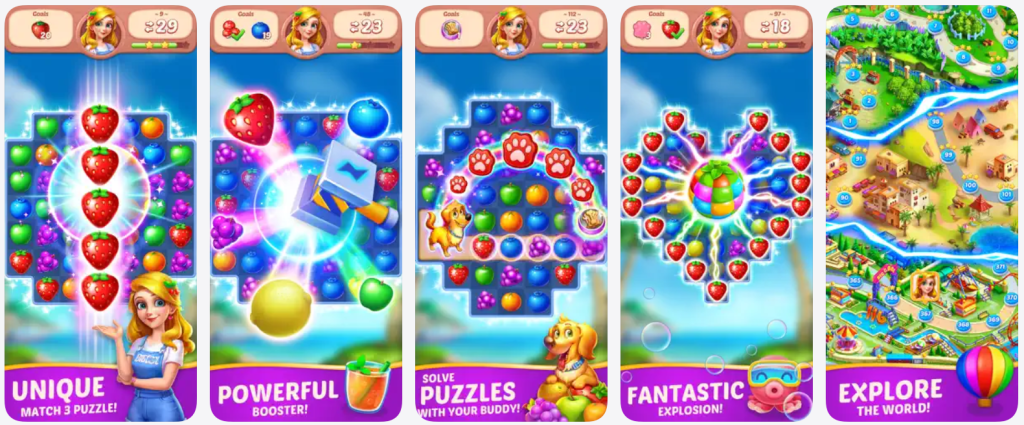
At first glance, Fruit Diary looks like a typical fruit-themed match-3 game. Bright fruits, colorful boards, and straightforward objectives make it instantly familiar to casual mobile gamers. However, after a few levels, the game begins to introduce its merge mechanics, which serve as the backbone of its progression system.
The core gameplay loop follows a simple structure:
- Complete match-3 levels
- Earn coins, resources, and rewards
- Merge items to create higher-level objects
- Unlock new content and progression milestones
- Return to puzzle levels for additional rewards
This dual-loop system helps prevent the repetitive feeling often associated with pure match-3 games. Even when players encounter difficult levels, they can continue making progress through merging activities, creating a stronger sense of accomplishment.
The learning curve is extremely beginner-friendly. Match-3 mechanics are easy to understand, and the merge system relies on familiar drag-and-combine interactions that most mobile gamers can grasp within minutes.
Visual Design and Audio Experience

One of the game’s strongest features is its presentation. Fruit Diary embraces a bright and cheerful visual style that feels welcoming from the moment players launch the game.
The fruit designs are colorful and easy to distinguish, helping players quickly identify matches during gameplay. Animations are smooth, and special combinations create satisfying visual effects without overwhelming the screen.
Successful merges are accompanied by rewarding animations that reinforce player progression. While the effects are not as dramatic as those found in some top-tier puzzle games, they provide enough visual feedback to make each achievement feel worthwhile.
The audio design follows a similarly relaxing approach. Background music remains light and unobtrusive, making it suitable for longer play sessions. Sound effects for matching, merging, and completing objectives contribute to a calming atmosphere that many casual players will appreciate.
For users looking for a low-stress gaming experience, the game’s visual and audio presentation works particularly well.
Level Design and Difficulty Progression

The early stages of Fruit Diary are designed to build momentum. Levels are relatively easy, rewards are frequent, and new features are introduced at a comfortable pace.
This creates a strong sense of progression during the first several hours of gameplay.
As players advance, however, the difficulty begins to increase. More complex objectives appear, including obstacle-clearing challenges, limited-move stages, and levels requiring strategic use of boosters.
The difficulty curve is generally reasonable, although certain stages can feel intentionally restrictive. Players may occasionally finish a level just one move short of success, encouraging the use of boosters or additional attempts.
The combination of match-3 and merge systems adds depth, but it can also create occasional pacing issues. Some players may prefer focusing on puzzle-solving, while others enjoy the merge progression more. Because both systems are closely connected, switching between them is often necessary for continued advancement.
Whether this feels engaging or repetitive will largely depend on individual player preferences.
Monetization and Free-to-Play Experience
Like many modern mobile puzzle games, Fruit Diary uses a combination of in-app purchases (IAP) and rewarded advertisements (IAA).
Most advertisements are optional and appear as rewarded videos that provide benefits such as:
- Extra moves
- Additional resources
- Bonus rewards
- Temporary boosts
This approach gives players a choice rather than forcing constant interruptions.
The in-app purchase offerings mainly include resource packs, boosters, and premium bundles. While spending money can accelerate progression, the game remains reasonably accessible for free-to-play users.
During the early and mid-game stages, non-paying players can enjoy the majority of content without significant restrictions. Later progression may require more patience, particularly when energy limitations and difficult levels become more common.
Overall, the monetization system feels relatively balanced compared to many competing puzzle games.
Pros and Cons

✅Pros
✅Successfully combines match-3 puzzles with merge progression.
✅ Bright, colorful visuals that create a relaxing atmosphere.
✅ Beginner-friendly gameplay suitable for casual audiences.
✅ Provides long-term progression beyond simple level completion.
✅ Optional ads are less intrusive than many competitors.
❌Cons
❌Some later levels rely heavily on limited moves for difficulty.
❌ Frequent switching between puzzle and merge systems may not appeal to every player.
❌ Progression can slow noticeably in the later stages.
Final Verdict
Fruit Diary – Merge & Match 3 may not completely reinvent the puzzle genre, but it successfully combines two proven gameplay styles into a polished and enjoyable package. The match-3 mechanics provide immediate satisfaction, while the merge system offers a longer-term sense of progression that keeps players engaged beyond individual levels.
Players looking for a relaxing mobile game with colorful visuals, accessible gameplay, and steady progression will likely find plenty to enjoy here. While some monetization and pacing issues emerge later in the experience, they do not significantly detract from the game’s overall appeal.
Key Selling Points
- A well-balanced combination of match-3 puzzles and merge progression.
- Bright visuals and relaxing sound design ideal for casual gaming.
- Long-term goals that help reduce the repetitive nature of traditional puzzle games.
Areas for Improvement
- Smoother late-game progression and reduced difficulty spikes.
- More flexibility for players who prefer one gameplay system over the other.
Recommended For: Casual puzzle fans, merge-game enthusiasts, and players looking for a relaxing game to enjoy during short breaks, commutes, or downtime.
Download Link: