

Strava:Running, Cycling & Hiking App – Train, Track & Share
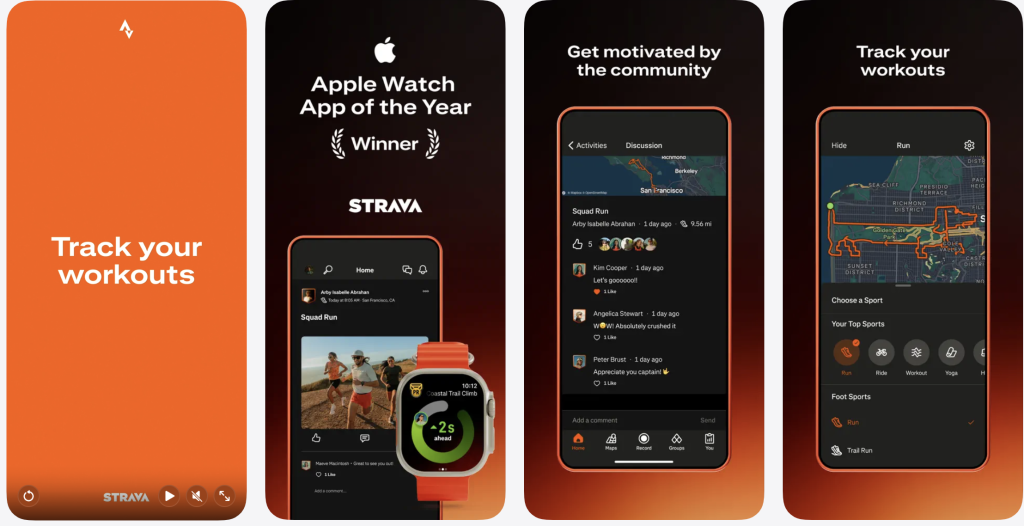
Strava lets you track your running and riding with GPS, join Challenges, share photos from your activities, and follow friends.
Strava Review: Is It Still the Best Fitness App for Runners and Cyclists?
A comprehensive review of Strava’s tracking accuracy, social features, training insights, and whether the Premium subscription is worth paying for.
Quick Specifications
| Category | Details |
|---|---|
| Developer | Strava, Inc. |
| Platforms | iOS, Android, Web |
| Best For | Running, Cycling, Hiking, Walking |
| Free Version | Yes |
| Premium Subscription | Yes |
| GPS Tracking | Yes |
| Smartwatch Support | Garmin, Apple Watch, COROS, Polar, Suunto, Wahoo and more |
| Overall Rating | 4.7/5 |
What Is Strava?
Strava is much more than a GPS workout tracker. Over the years, it has evolved into one of the largest online communities for endurance athletes, attracting millions of runners, cyclists, hikers, and triathletes worldwide.
Unlike traditional fitness apps that simply record distance and calories burned, Strava transforms every activity into a long-term training record. It combines performance analysis, route discovery, friendly competition, and social interaction in a way that keeps athletes motivated long after their workout has ended.
After testing Strava over several months alongside Garmin watches, Apple Watch Ultra, Wahoo cycling computers, and chest heart-rate monitors, I found that its greatest strength isn’t GPS accuracy alone. Instead, it’s the way Strava encourages consistency through meaningful data and community engagement.
Our Real-World Testing Experience
In daily use, Strava fits naturally into an athlete’s existing training routine. Rather than recording every workout directly with the smartphone app, I primarily used Garmin and Apple Watch devices, allowing completed activities to sync automatically with Strava.
The synchronization process was reliable and required almost no manual intervention. Heart rate, elevation gain, cadence, pace, power data, and GPS routes transferred accurately within minutes, making Strava an ideal central hub for reviewing workouts from multiple devices.
This seamless integration becomes increasingly valuable during marathon training or long cycling seasons, where managing hundreds of workouts manually would quickly become frustrating.
During testing, I particularly liked:
- Automatic synchronization with Garmin Connect and Apple Health
- Clean workout summaries with clear performance charts
- Reliable GPS route visualization
- Fast upload speed after finishing activities
- Easy sharing with friends and training partners
For athletes already invested in a smartwatch or cycling computer, Strava feels less like another fitness app and more like the platform where all training data comes together.
Segment Competition Is What Makes Strava Differen
If there’s one feature that truly separates Strava from competitors, it’s Segments.
Segments are user-created sections of roads or trails where every athlete’s performance is automatically compared against everyone else’s. Whether it’s a steep mountain climb, a riverside running path, or a popular city sprint, Strava records your time each time you pass through.
This simple idea fundamentally changes how everyday training feels.
Instead of repeating the same route every week without much excitement, each run becomes another opportunity to beat your previous personal record (PR). Even easy training sessions become more engaging because you’re constantly aware of nearby Segments.
For cyclists, the famous KOM (King of the Mountain) and QOM (Queen of the Mountain) rankings add another layer of motivation. Holding the fastest time on a local climb earns a virtual crown that many riders proudly defend for months—or even years.
Unlike racing events that happen only a few times each season, Segment competitions are available every day, giving recreational athletes a reason to push themselves without entering formal competitions.
Training Analytics That Actually Improve Performance
Many fitness apps generate dozens of charts that look impressive but provide little practical value. Strava generally avoids this problem by presenting performance data in ways that support smarter training decisions.
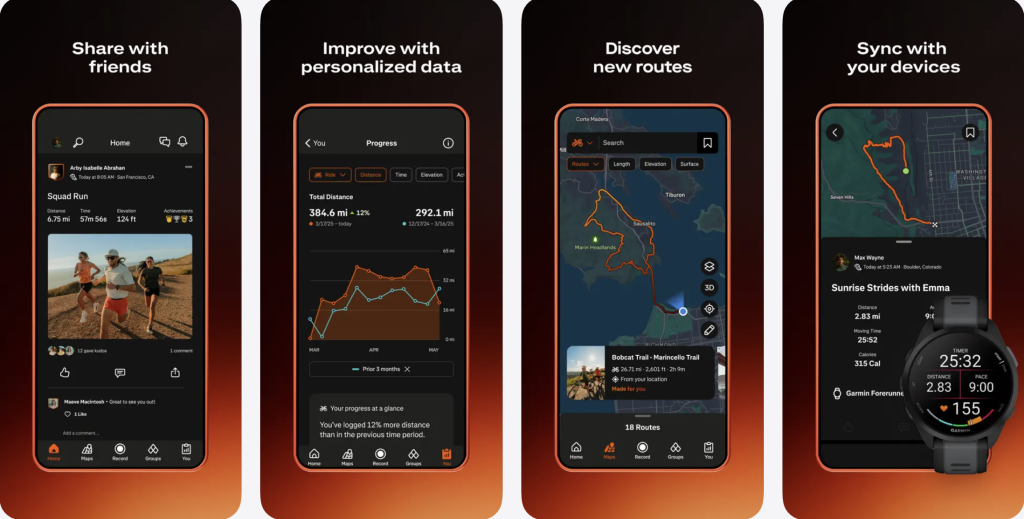
After every activity, users receive detailed information including pace trends, elevation profiles, heart-rate zones, cadence, moving time, elapsed time, and workout intensity.
Premium subscribers gain access to more advanced metrics, including Relative Effort, which estimates training load based on heart rate rather than distance alone. A slow but demanding trail run may produce a higher Relative Effort score than a longer, easier road run, providing a much more realistic picture of physical stress.
Another valuable feature is Fitness & Freshness, which estimates long-term fitness, accumulated fatigue, and recovery status. While it shouldn’t replace advice from a professional coach, it provides useful guidance for runners preparing for half marathons, marathons, cycling events, or triathlons.
Rather than overwhelming users with raw numbers, Strava presents data in a way that encourages better pacing, smarter recovery, and more consistent long-term improvement.
Pros & Cons
| Pros | Cons |
|---|---|
| Excellent Garmin and Apple Watch synchronization | Many advanced features require Premium |
| Huge global fitness community | Route suggestions may occasionally include unsafe roads |
| Segment competitions keep training motivating | Limited built-in coaching plans |
| Detailed performance analytics | Beginners may not use every advanced metric |
Route Discovery and Community Features
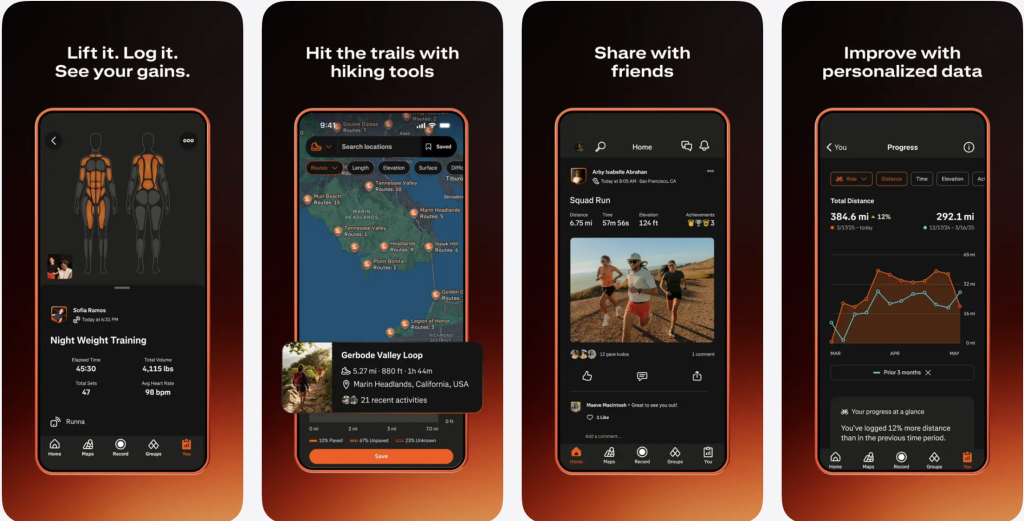
One of Strava’s biggest advantages over traditional fitness apps is its community-driven ecosystem. Every activity contributes to a constantly growing database that helps users discover popular running and cycling routes around the world.
The Global Heatmap is particularly useful when traveling or exploring unfamiliar areas. Instead of guessing where locals exercise, you can quickly identify roads, trails, and paths that are frequently used by experienced runners and cyclists. During testing, this feature made it much easier to plan safe and enjoyable workouts in new cities.
Another feature that deserves recognition is Kudos. While it may look like a simple “like” button, it creates a surprisingly positive community culture. Receiving encouragement after an early morning run or a challenging century ride adds a social element that keeps many athletes motivated throughout the year.
Device Compatibility
Strava supports nearly every major fitness ecosystem, making it one of the easiest platforms to integrate into an existing training setup.
| Device | Compatibility | Experience |
|---|---|---|
| Garmin Watches | ✅ | Excellent |
| Apple Watch | ✅ | Excellent |
| COROS | ✅ | Very Good |
| Polar | ✅ | Very Good |
| Suunto | ✅ | Very Good |
| Wahoo Bike Computers | ✅ | Excellent |
| Fitbit | ✅ | Good |
Unlike some fitness apps that require proprietary hardware, Strava acts as a central platform where activities from different devices can be synchronized automatically. This flexibility is especially valuable for athletes who upgrade watches over time or use different devices for running and cycling.
Strava Free vs Premium
One of the most common questions from new users is whether the Premium subscription is actually necessary. The answer depends on your training goals.
| Feature | Free | Premium |
|---|---|---|
| GPS Activity Recording | ✅ | ✅ |
| Workout History | ✅ | ✅ |
| Basic Performance Statistics | ✅ | ✅ |
| Full Segment Leaderboards | ❌ | ✅ |
| Route Builder | ❌ | ✅ |
| Live Segments | ❌ | ✅ |
| Relative Effort | ❌ | ✅ |
| Fitness & Freshness | ❌ | ✅ |
| Advanced Training Insights | Limited | ✅ |
For casual runners and recreational cyclists, the free version is more than capable of recording workouts and sharing activities. However, athletes training for races or looking to improve performance will benefit from Premium’s deeper analytics and planning tools.
Strava vs Nike Run Club vs Keep
Choosing the right fitness app depends on your goals rather than simply downloading the most popular option.
| Feature | Strava | Nike Run Club | Keep |
|---|---|---|---|
| Running Tracking | ⭐⭐⭐⭐⭐ | ⭐⭐⭐⭐☆ | ⭐⭐⭐ |
| Cycling Features | ⭐⭐⭐⭐⭐ | ⭐ | ⭐ |
| Social Community | ⭐⭐⭐⭐⭐ | ⭐⭐⭐ | ⭐⭐ |
| Training Analytics | ⭐⭐⭐⭐⭐ | ⭐⭐⭐ | ⭐⭐ |
| Guided Coaching | ⭐⭐⭐ | ⭐⭐⭐⭐⭐ | ⭐⭐⭐⭐ |
| Route Discovery | ⭐⭐⭐⭐⭐ | ⭐⭐ | ⭐ |
If you’re primarily focused on endurance sports such as running, cycling, hiking, or triathlon, Strava offers the most complete ecosystem. Nike Run Club is better suited for beginners looking for guided running plans, while Keep is stronger for home workouts and general fitness.
Who Should Use Strava?
Strava is an excellent choice if you:
- Train regularly for running or cycling events.
- Enjoy tracking long-term performance improvements.
- Use a Garmin, Apple Watch, or cycling computer.
- Like friendly competition through Segments.
- Want to discover new outdoor routes while traveling.
You may prefer another app if you:
- Primarily exercise indoors.
- Want guided workout videos instead of performance analytics.
- Rarely use GPS-based outdoor activities.
- Don’t need advanced training metrics.
Where Strava Could Improve
Although Strava remains one of the best fitness platforms available, it isn’t without limitations.
The biggest criticism is that many features once available to free users are now locked behind the Premium subscription. Casual users may feel that the gap between the free and paid versions has widened over the years.
Route recommendations can also occasionally prioritize popularity over practicality. While the Global Heatmap is extremely useful, it doesn’t always account for temporary road closures, heavy traffic, or changing local conditions. Users should always verify unfamiliar routes before heading outdoors.
Finally, Strava focuses more on tracking and analysis than structured coaching. Athletes seeking detailed training plans or guided workout programs may still need additional apps or coaching services.
Privacy and Safety
Because Strava records precise GPS locations, privacy settings should be configured immediately after creating an account.
Recommended privacy settings:
- Enable Privacy Zones around your home and workplace.
- Hide activity start and end points.
- Limit activity visibility to approved followers.
- Review connected apps regularly.
These settings significantly reduce the risk of exposing frequently visited locations while still allowing you to enjoy Strava’s social features.
Frequently Asked Questions
Can I use Strava without paying for Premium?
Yes. The free version includes GPS activity recording, workout history, social sharing, and basic performance metrics. Most casual users will find it sufficient, while serious athletes benefit more from Premium analytics.
Does Strava work with Garmin and Apple Watch?
Yes. Strava integrates seamlessly with Garmin Connect, Apple Health, COROS, Polar, Suunto, Wahoo, and many other platforms. Once connected, activities synchronize automatically with minimal effort.
Is Strava better than Nike Run Club?
For endurance athletes, yes. Strava offers stronger community features, more advanced analytics, and significantly better cycling support. Nike Run Club remains an excellent option for runners who prefer structured coaching and guided audio sessions.
Final Verdict
After extensive real-world testing, Strava continues to stand out as one of the most complete fitness platforms for endurance athletes.
Its greatest strength isn’t simply recording workouts—it creates an ecosystem where training data, friendly competition, route discovery, and community engagement work together to encourage long-term consistency. Features such as Segments, Global Heatmaps, and advanced performance analytics make every run or ride feel more purposeful.
While the Premium subscription unlocks many of the platform’s most powerful tools, the free version remains one of the best options for tracking outdoor activities. Whether you’re preparing for your first 10K, training for a marathon, or chasing a local KOM on your favorite climb, Strava offers a balanced combination of motivation, insight, and flexibility that few competitors can match.
Download Here: